Fire, Flood & Escape of Water: Navigating Insurance Claims and Property Restoration in Essex
A sudden house fire, a severe flood, or a major burst pipe can instantly throw your life into disarray. Beyond the initial shock, property owners are immediately thrust into a complex world of emergency containment, loss adjusters, and technical insurance jargon.
When making a claim, you will frequently encounter terms like “insured peril” or “escape of water”. Understanding what these terms mean – and knowing how to manage the crucial recovery window—can mean the difference between a swift, stress-free restoration and months of costly delays.
At Contrast, we specialise in multi-trade insurance works across Southend, Essex, London and the South East. We handle everything from initial damage mitigation and drying to full structural restoration. Here is your definitive guide to understanding fire and water damage claims and getting your property safely restored.
1. Demystifying Insurance Terms: ‘Escape of Water’ vs. ‘Flood’ vs. ‘Insured Peril’
When filing an insurance claim, clarity is everything. Insurers categorise property damage under specific headings known as insured perils (the specific risks or events covered by your insurance policy).
Understanding the distinctions between these perils helps ensure your claim is processed accurately:
- Escape of Water: This is one of the single most common property insurance claims in the UK. It refers specifically to water that has leaked or escaped from an internal, fixed domestic system – such as a burst heating pipe, a failed boiler valve, a leaking radiator, or an overflowing tank. It does not include water entering from outside the building.
- Flood: In insurance terms, a flood refers exclusively to water entering your property from an external source. This includes rising rivers, overflowing surface drains following heavy storms, or seawater ingress.
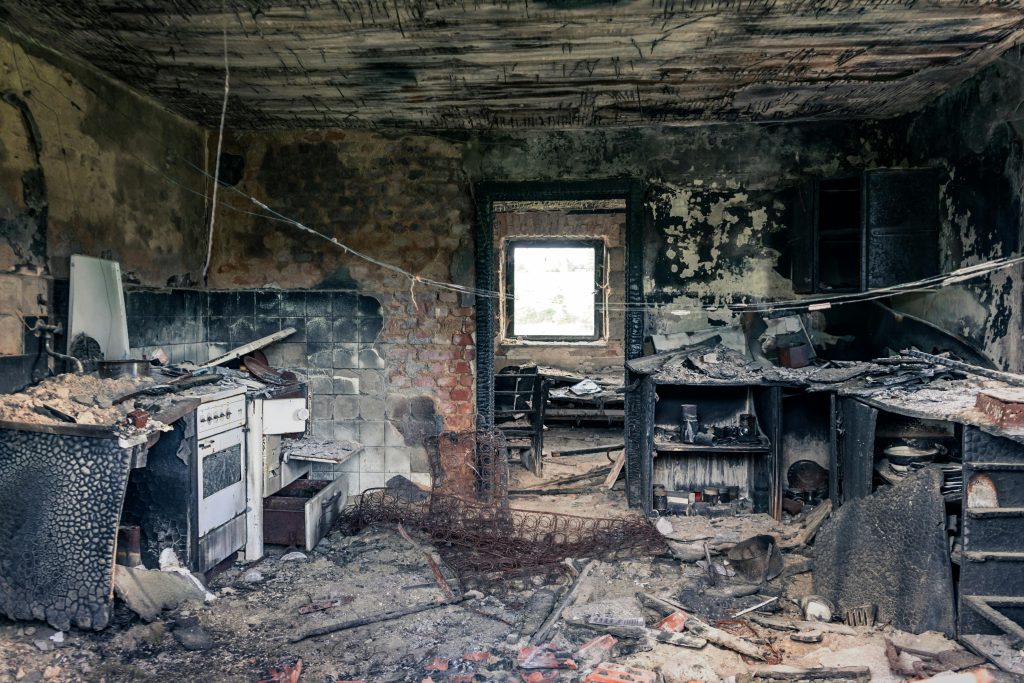
- Fire & Smoke Damage: This peril encompasses direct thermal burning as well as secondary smoke and soot damage. Acidic soot residues can quickly corrode metal fixtures and penetrate porous plaster, requiring specialist chemical washdowns alongside structural repairs.
2. The Critical First 48 Hours: Emergency Mitigation & Structural Drying
With any water or fire event, the damage doesn’t stop once the flames are out or the leak is isolated. Secondary damage – such as toxic black mould, timber rot, and plaster disintegration – can take hold within 24 to 48 hours.
Before cosmetic or structural reinstatement can even be considered, a strict mitigation and drying process must take place:
- Moisture Mapping & Thermal Imaging: Water travels along hidden pathways inside wall cavities, ceiling voids, and subfloors. We use non-destructive thermal imaging and moisture meters to map out the full extent of the water spread.
- Controlled Dehumidification & Industrial Drying: Drying out a property requires a calculated balance of heat, airflow, and dehumidification. Simply turning up the central heating can warp structural timbers and encourage mould growth. We install targeted industrial drying equipment to safely extract moisture from the fabric of the building.
- Decontamination & Soot Stripping: Floodwater often carries ground contaminants, while fires leave behind carcinogenic soot. Thorough sanitisation and air scrubbing are vital to make the environment safe for contractors and occupants.
Insurance Claim Tip: Document Everything Before Cleanup Begins
Before disposing of waterlogged carpets, damaged furniture, or burnt items, take high-resolution photos and videos of every affected room and item. Insurance loss adjusters require clear proof of the damage and peril to approve your scope of work and contents claims.
3. Bridging the Gap: From Mitigation to Full Reinstatement
Once your property is dried, disinfected, and certified safe, the physical restoration phase begins. This is where many property owners experience friction, as traditional insurers often expect you to coordinate separate drying technicians, plumbers, plasterers, and decorators yourself.
Contrast operates as a single, turnkey contractor for both the insurer and the property owner. We prepare itemised, evidence-based scopes of work that loss adjusters can approve quickly, avoiding unnecessary back-and-forth.
Need more detail on the physical rebuild process?
Once your insurance claim is approved and drying is complete, the structural reinstatement phase begins. For a detailed breakdown of how we handle non-destructive diagnostics, high-level drone surveys, and full multi-trade rebuilds, read our Complete Guide to Property Reinstatement in Essex.
4. Why Choose a Turnkey Insurance Contractor?
Managing a fire or flood claim is exhausting. Hiring an end-to-end multi-trade specialist like Contrast offers clear advantages:
- Single Point of Contact: You deal with one dedicated project manager rather than juggling half a dozen independent tradespeople.
- Seamless Transition: Our team moves straight from drying and strip-out into structural rebuilds, luxury kitchen/bathroom installations, and final decorating—slashing overall project timelines.
- Loss Adjuster Compliance: We provide clear, transparent reporting that meets the exact technical requirements of UK insurance companies and local housing authorities.
Recovering From Fire or Water Damage in Essex?
Whether you are dealing with an escape of water from a burst pipe, severe flood recovery, or fire damage, Contrast is here to take the stress out of your reinstatement project.
Contact Contrast today to arrange an urgent property inspection or to discuss how we can work directly with your insurer.
Please note that this guide is provided for general informational purposes only and does not constitute formal legal, financial, or insurance advice, and Contrast Ltd assumes no liability for any actions taken based on the information provided herein.